
Can following 13F filings beat the market? What the research found.
Twenty years of academic work and one replication later: yes, carefully, in baskets, and the edge is not what you think it is.

45 Days Late #3. Post 1 measured 2,170 smart-money portfolios and found the average one loses to the index. Post 2 measured the famous 45-day lag and found it costs a copier of patient funds roughly nothing. Which left a promise: a question with an academic literature, a twenty-year answer, and an honest catch. Here it is.
If following filings one hero at a time fails, and the lag was never the problem, an obvious question remains open: is there any way to hold this data that has actually worked? People have been studying that question in academic finance since before I had a brokerage account, and the answer has been surprisingly consistent. It just looks nothing like the way most people use 13Fs.
What twenty years of papers actually found
Four studies, told in the order that builds the argument.
Let me quickly run through them.
Hedge funds vs Mutual funds through 13F lens
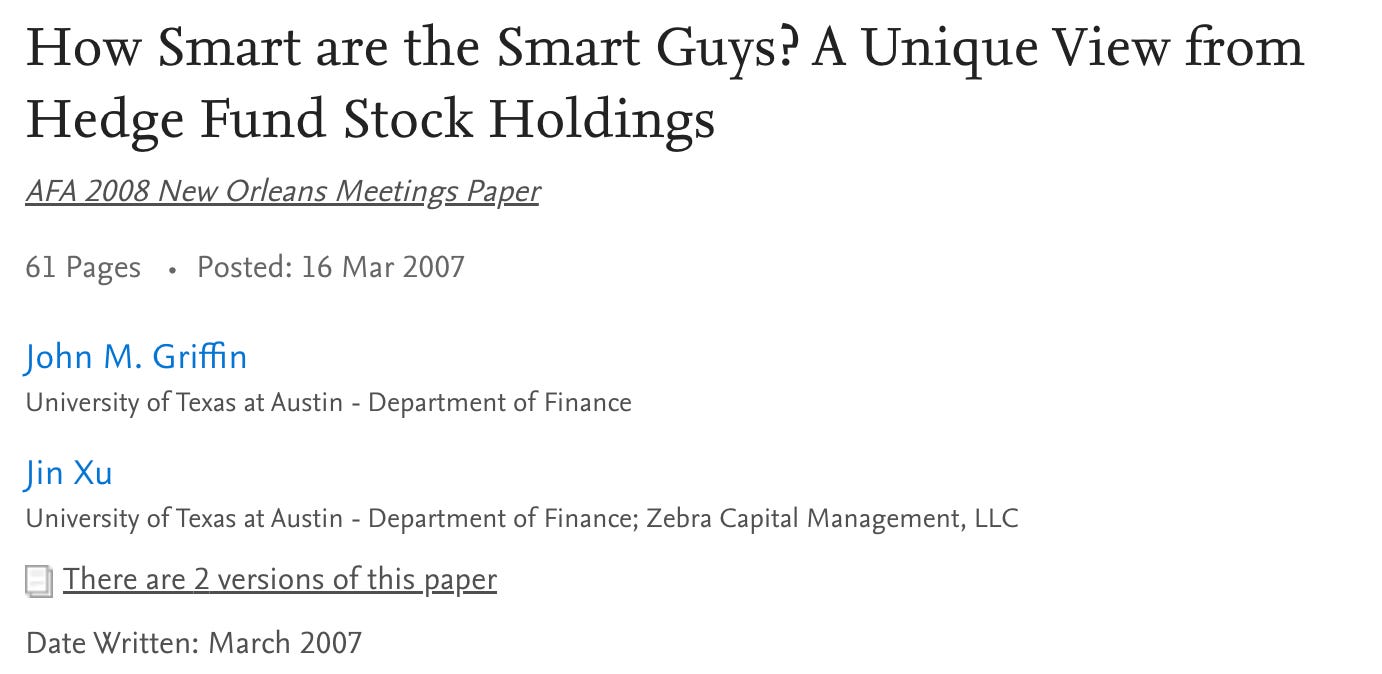
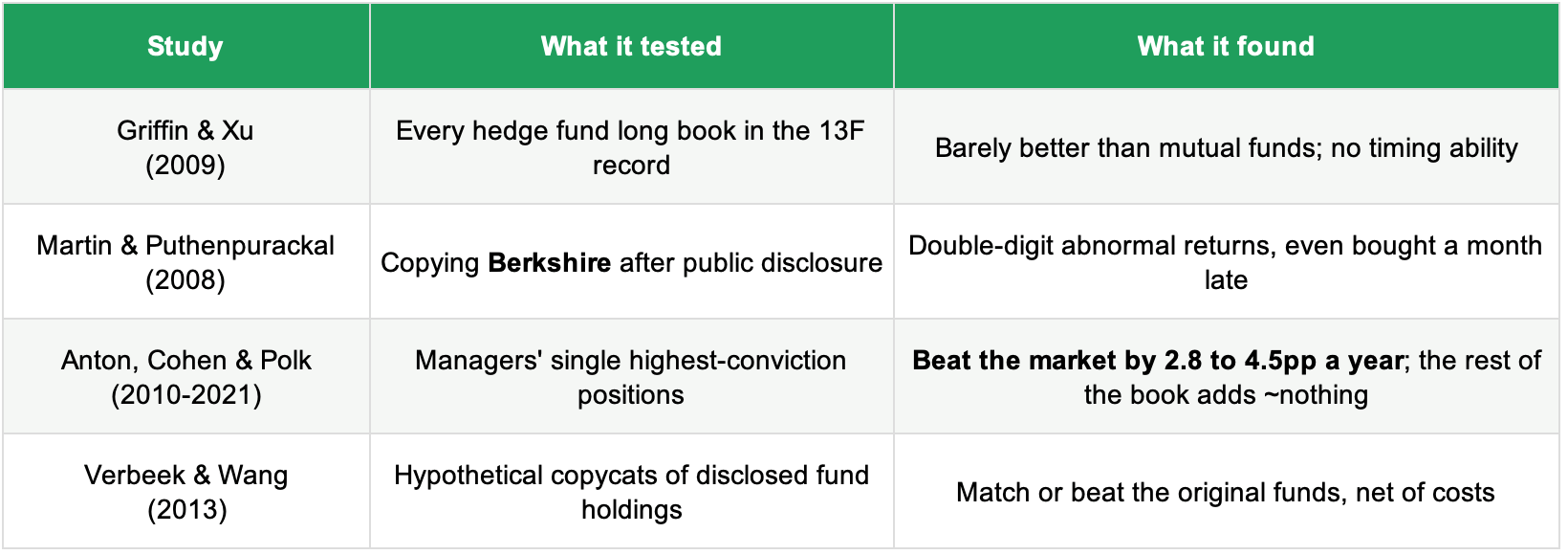
Griffin and Xu looked at every hedge fund long book in the 13F record and found the average one beats mutual funds by about 1.3 points a year at best, with no sector-timing or style-picking ability at all. That is the academic version of my post 1: the field, taken whole, is unremarkable. Anyone selling you “the smart money” as a category is selling you the gray cloud from my first chart.
The 13F trade of the century that everyone missed
The strange exception that started the whole literature.
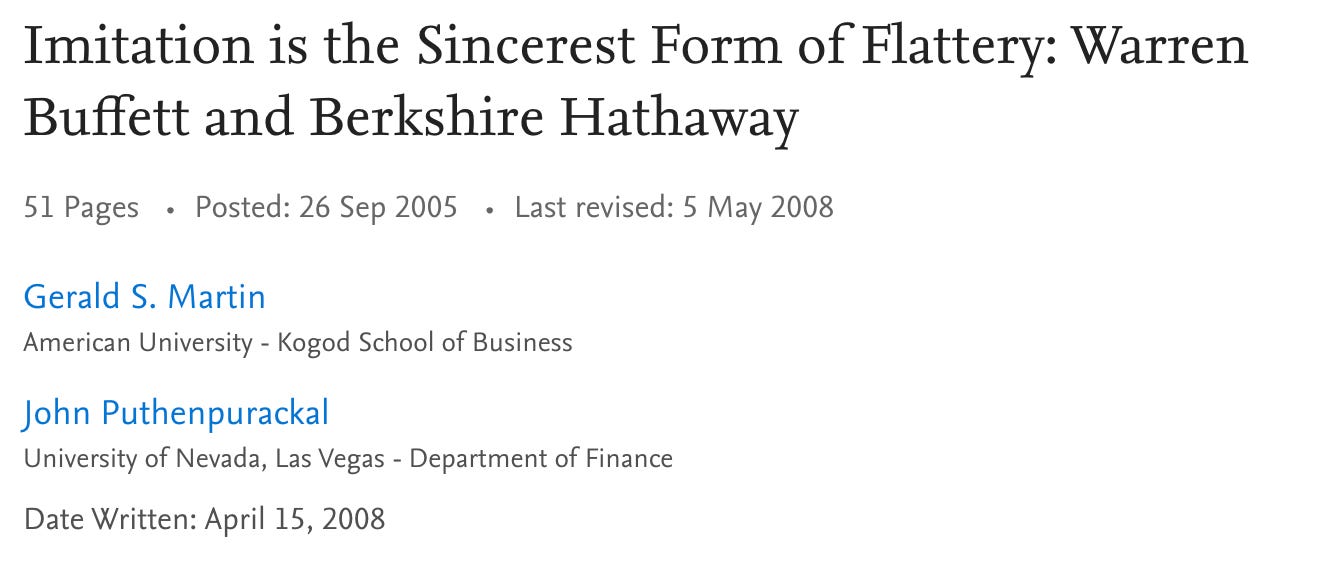
Martin and Puthenpurackal reconstructed Berkshire Hathaway’s equity portfolio from 1976 to 2006 and asked the copy-trade question directly: what if you bought what Buffett disclosed, a month after the disclosure? Double-digit abnormal returns a year, for three decades, from public documents. The market systematically under-reacted to the news. One fund is an anecdote, even a 31-year one. But it established the mechanism that matters here: disclosure is not the same thing as the market having priced the information in.
If you only had to choose one..
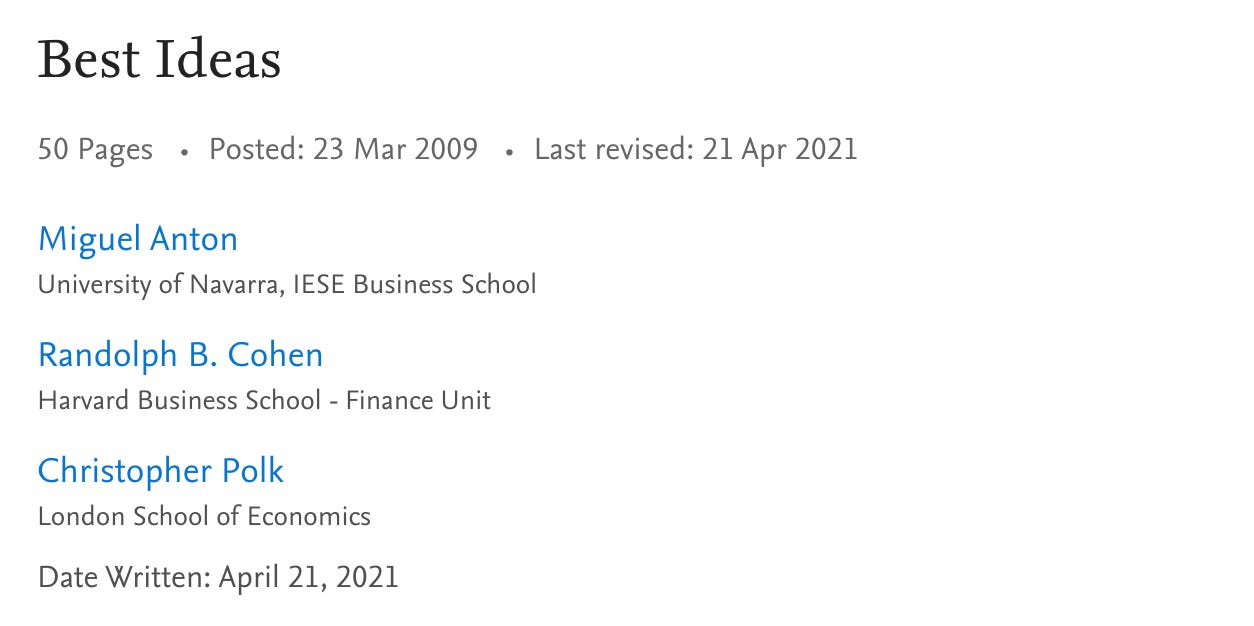
Anton, Cohen and Polk took every active manager and isolated each one’s “best idea”: the single position their portfolio weights say they believe in most. Those positions, and pretty much only those, beat the market: by 2.8 to 4.5 points a year depending on the benchmark, while the rest of the book adds roughly nothing. Managers are not uniformly skilled or unskilled; their skill is concentrated in the handful of names they size like they mean it. The 6% positions know something. The 40 one-percenters are diversification theater.
Free-riding is free
Verbeek and Wang built hypothetical copycat funds that hold nothing but what other funds disclosed, bought after the disclosure, and found they match or marginally beat the originals net of costs. Free-riding on disclosed holdings works, and it got easier after regulators forced more frequent disclosure. The copy is viable infrastructure. The question was only ever what to copy.
Put the four together and the shape of the answer emerges.
Don’t copy books - the average book is noise.
Copy conviction.
Because that is where the skill hides. The lag doesn’t kill it, because the market digests these documents slowly.
And don’t ride one manager. Because one manager is an anecdote with a drawdown coming.
Which suggests something none of these papers quite built: take many concentrated, patient managers, keep only their high-conviction positions, and hold the names where several of them independently agree. A consensus basket.
So I built it and ran it
The setup:
Roughly 80 concentrated filers.
Position counts as a conviction vote only when it is at least 5% of that filer’s book and has been held two consecutive quarters.
Merge share classes, rank names by how many independent filers are voting for them.
Hold the top 10 - a name stays until it drops out of the consensus.
The list is reviewed once a quarter, about 52 days after the filing quarter ends, and trades happen only when membership actually changes: entries are funded by exits, winners are left to run untrimmed.
There is no quarterly reset of weights, no trimming back to equal slices - the portfolio mostly just sits there on purpose.
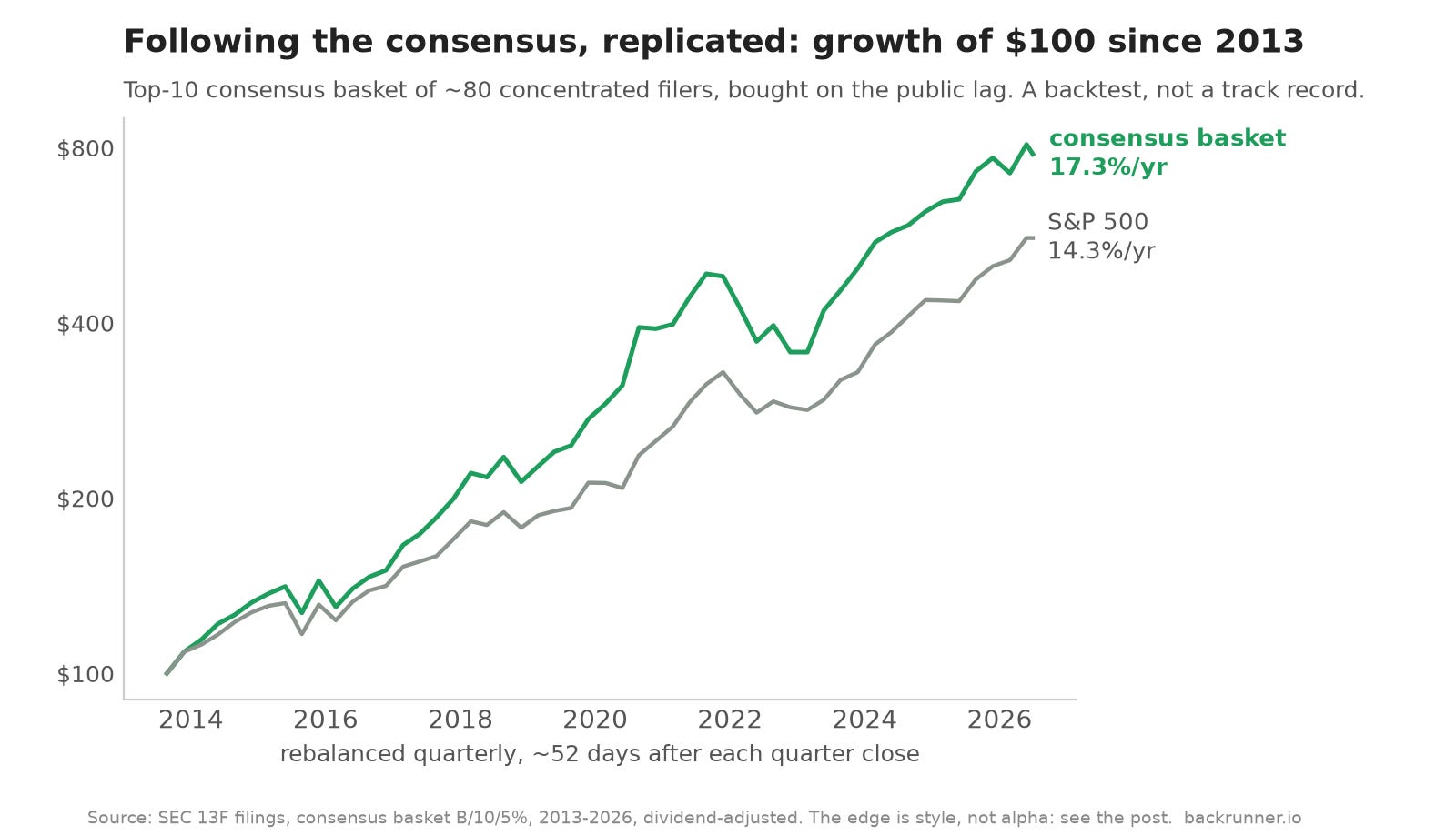
Over 2013-2026 that basket compounds at 17.3% a year against the S&P 500's 14.3%, about 3 points a year over one of the strongest index decades on record.
And because a single backtest number is exactly the kind of thing previous posts taught us to distrust, the validation mattered more than the headline: the edge holds at +2.5 to +3.4 points for nearly every train/test split I tried, stays positive in 8 of 10 rolling 3-year windows (the exceptions bracket a 2021-2022 give-back you can see in the chart), survives realistic transaction costs, and survives investor's dividend taxes. Costs stay immaterial because almost nothing ever trades: across twelve years the basket swapped one name in a typical quarter and did nothing at all in roughly one quarter in five.
Boring. But works.
This replication is the reason backrunner exists, and the same consensus data now updates there every quarter, in public, where a backtest can be embarrassed by the future. That felt like the honest way to hold a result I wanted to believe.
The honest catch
Here is the part most write-ups of this strategy leave out, I found it while trying to break my own result.
Run the basket’s returns through a standard factor attribution, the statistical test that asks “could this performance be explained by well-known styles rather than skill”, and the answer is: mostly yes.
The basket is a large-cap quality/growth portfolio. The residual alpha the part attributable to something like stock-picking magic, is +0.8% a year with a t-statistic of 0.48. Statistically, zero.
So the honest statement of the twenty-year answer is this: following the consensus of concentrated, patient filers has been a disciplined, cheap, rules-based way to hold a style that the market rewarded, harvested from public documents on a 45-day delay.
It is not evidence anyone involved, including me, can see the future.
Whether that style keeps being rewarded, and what happens if it stops, is a real question, and it gets the full engine-room treatment later in the series. I am not going to promise you alpha. The data says I don’t have any to promise. What the data does support is narrower and, I think, more interesting: the signal is real, the discipline is replicable, and the returns leaderboard was never where it lived.
Which brings us to the next question
Every study above quietly assumes you already know which managers to listen to.
“Concentrated, patient filers” is doing enormous work in my rules, and post 1 of the series showed why it has to: in the full field, only losing persists. Pick the universe wrong and the consensus is noise.
So the next question is the one everything actually hinges on: whom, exactly, do you follow? Can you define “worth listening to” with rules, in advance, without peeking at returns? That turns out to be the hardest and most interesting problem in this whole series. Next post.
Frequently asked questions
Does following 13F filings beat the market? Following individual funds mostly does not: the average 13F filer trails the index and past winners revert to coin flips. The academic evidence supports something narrower: baskets built from many managers’ disclosed high-conviction positions, bought on the filing lag, have historically outperformed by roughly 2 to 3 points a year. Factor attribution says that edge is a style tilt, not stock-picking alpha.
What is a 13F consensus basket? A rules-based portfolio of the stocks that several concentrated managers independently hold at high conviction (large position sizes) at the same time, rebuilt each quarter after the filings become public. The idea is that agreement between independent, disciplined stock pickers is a stronger signal than any single manager’s book.
Why doesn’t the 45-day filing lag destroy the edge? Two reasons. Patient, concentrated funds barely change their books inside a quarter, so the stale copy still matches the fund (measured in post 2 of this series). And the research record shows the market digests disclosed positions slowly; even Berkshire’s disclosed buys kept outperforming when bought a month after the disclosure.
Not investment advice. Do your own research.